
How Much Does Knee Replacement Surgery Cost? Breakdown & Insurance Coverage 2026

Knee replacement surgery cost comprises the prosthetic implant, surgical procedure, anesthesia, inpatient stay, and postoperative physical rehabilitation for severely degenerated knees. The total fee varies based on implant type, surgical technique, medical history, and health insurance tier, thoroughly consulted with transparent estimates by Sante International Hospital specialists upon clinical examination.
1. How Much Does Knee Replacement Surgery Cost?
At Sante International Hospital, the cost of total knee replacement surgery ranges from 70,000,000 – 120,000,000 VND per joint, depending on the artificial implant type, surgical approach, and health insurance benefit tier. Below are the key cost components:
- Preoperative examination, laboratory tests, and diagnostic imaging: Includes weight-bearing standing knee X-rays, MRI scans (when meniscus or ligament evaluation is indicated), complete blood count, coagulation profile, liver/kidney function tests, electrocardiogram (ECG), and chest radiograph.
- Prosthetic knee implant materials: Accounts for the largest proportion (typically 40,000,000 – 70,000,000 VND per set), varying by origin (USA, Europe, Japan), materials (titanium alloy, cobalt-chromium, bioceramics), and surface fixation technology.
- Surgical procedure and anesthesia management: Lead surgeon fee, assistant surgical team, anesthesiologist, and intraoperative consumables (bone cement, antibacterial sutures, electrosurgical instruments, closed-suction drainage system).
- Inpatient accommodation and clinical nursing care: Average hospital stay of 3 to 5 days in sterile inpatient rooms, including prophylactic antibiotics, multimodal pain medications, intravenous infusions, and 24/7 clinical nursing care.
- Postoperative physical rehabilitation: Initiated within the first 24 hours post-surgery, providing guided knee mobilization, walker ambulation training, and quadriceps/lower extremity strengthening exercises.
| Cost Category | Estimated Fee (Before Insurance) | Health Insurance Coverage Benefit |
|---|---|---|
| Preoperative consultation, laboratory tests, X-ray, and MRI | 1,500,000 – 4,000,000 VND | Covered under the health insurance list (80% – 100% of entitlement rate) |
| Artificial knee implant (total / unicompartmental) | 40,000,000 – 75,000,000 VND | Reimbursed according to the statutory price ceiling for medical supplies set by the Ministry of Health |
| Surgery, anesthesia, and medical consumables | 15,000,000 – 25,000,000 VND | Covered by health insurance based on approved technical service tariffs |
| Inpatient Hospitalization (3–5 days) & Medications | VND 5,000,000 – 12,000,000 | Social Health Insurance covers inpatient hospital bed fees and listed formulary medications |
| Inpatient Rehabilitation Therapy | VND 1,500,000 – 3,000,000 | Social Health Insurance covers prescribed kinesitherapy and mobilization techniques |
| ESTIMATED OUT-OF-POCKET TOTAL | VND 70,000,000 – 120,000,000 | Insured patients typically co-pay approximately 40 – 75 million VND |
2. What Is Knee Replacement and When Is It Indicated?
What Is Artificial Knee Arthroplasty?
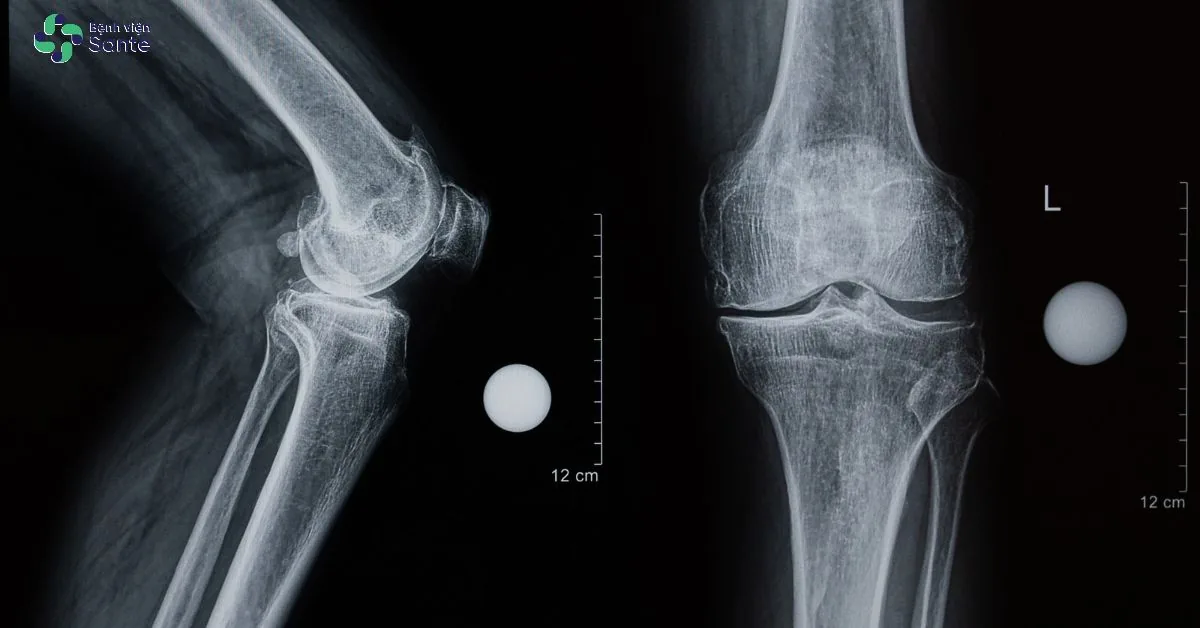
Knee Arthroplasty is an orthopedic surgical procedure aimed at removing damaged, deformed knee cartilage and bone caused by osteoarthritis severe wear or trauma, subsequently replacing them with a specialized prosthetic joint crafted from medical-grade biocompatible alloys and a high-molecular-weight polyethylene insert. The artificial joint restores a smooth gliding surface, eradicates painful bone friction, and realigns the mechanical axis of the lower extremity.
Indications and Contraindications
Knee replacement surgery is the definitive surgical intervention, indicated by medical specialists only when patients fall into the following clinical categories:
- Grade 3 and Grade 4 knee osteoarthritis: Severe joint space collapse, prominent osteophytes, O-shaped (bowleg) or X-shaped (knock-knee) deformities, and chronic pain persistent at rest and at night.
- Refractory to conservative treatments: Persistent debilitating pain despite oral analgesics, physical therapy, hyaluronic acid visco-supplementation, or PRP injections for 6 months or longer.
- Severe functional mobility impairment: Inability to walk more than 50 meters independently, difficulty rising from chairs or climbing stairs, severely degrading daily quality of life.
Contraindications for surgery: Active local joint or systemic infections, uncontrolled decompensated cardiovascular disease or diabetes, or functional paralysis of the lower limb.
3. Key Factors Influencing Total Knee Replacement Cost
Two patients undergoing the same knee replacement surgery may experience billing variations ranging from several million to tens of millions of VND. Below are the 5 core factors determining this cost difference:

Surgical Type: Total vs. Partial Knee Replacement
Unicompartmental (partial) knee replacement addresses solely the damaged medial or lateral compartment, conserving the majority of bone stock and native cruciate ligaments. Partial knee arthroplasty typically costs 15% to 25% less than total replacement due to smaller implants and shorter hospital stays.
Implant Materials and Global Manufacturer Brands
Genuine knee implants imported from leading global medical manufacturers (such as Zimmer Biomet, Stryker, DePuy Synthes, Smith & Nephew) offer high biocompatibility and durability lasting up to 20 to 25 years. Cemented implants are more cost-effective compared to cementless designs (which rely on biological bone ingrowth into porous coatings).
Surgical Techniques and Advanced Technology Assistance
Utilizing minimally invasive surgery (MIS), 3D computer navigation, or robotic-arm assistance enables surgeons to achieve millimeter-accurate bone resections and precise angular alignment while minimizing soft tissue disruption. These advanced techniques reduce postoperative pain, blood loss, and recovery time, though software and specialized instrumentation fees may apply.
Patient General Health, Comorbidities, and Preoperative Workup
Elderly patients frequently present with chronic comorbidities such as hypertension, diabetes, cardiovascular conditions, or chronic obstructive pulmonary disease (COPD). Preoperative preparation necessitates multidisciplinary consultations, glycemic control, hemodynamic stabilization, and specialized investigations, which moderately increase overall costs compared to healthy individuals.
Inpatient Hospitalization Duration and Rehabilitation Costs
Implementing the Enhanced Recovery After Surgery (ERAS) protocol helps shorten hospitalization to just 3 to 4 days, substantially saving room charges and antibiotic expenditures compared to traditional 7 to 10-day admissions.
4. Is Knee Replacement Surgery Covered by Health Insurance?
Knee replacement surgery is an approved medical procedure covered by the Social Health Insurance (SHI) fund when clinically indicated by an orthopedic specialist. This vital social welfare policy significantly alleviates the financial burden on patients.

Health Insurance Coverage Criteria for Knee Arthroplasty
Under the Health Insurance Law, patients are eligible for insurance coverage when:
- Seeking care at registered primary healthcare facilities or presenting valid referral documents from lower-tier hospitals.
- For inpatient admissions under statutory nationwide hospital access rules, patients receive full inpatient benefits according to legal coverage rates.
- Having documented surgical orders from a certified orthopedic specialist.
Statutory Insurance Benefit Tiers for Joint Surgery
Benefit rates depend on the designated beneficiary group indicated on your insurance card:
- 100% statutory coverage within the insured benefit catalog: Military officers, veterans, meritorious citizens, low-income households, ethnic minorities, and children under 6 (insurance codes QN, CA, CC, TE, BT...).
- 95% statutory coverage within the insured benefit catalog: Pensioners, disability allowance recipients, and near-poverty households (insurance codes HT, TC, CN...).
- 80% statutory coverage within the insured benefit catalog: Household health insurance participants and corporate employees (insurance codes GD, DN, CH...).
Important note on medical supply reimbursement ceilings: Artificial knee implants are reimbursed up to the ceiling limits established by the Ministry of Health. If the chosen implant model exceeds this statutory cap, the patient covers the remaining difference.
Out-of-Pocket Expenses Not Covered by Social Health Insurance
Health insurance does not cover services outside the statutory benefits list or optional on-demand upgrades:
- Value differential of premium implant models exceeding statutory insurance ceilings.
- Private inpatient room upgrades (single-occupancy rooms, VIP deluxe suites).
- Adjuvant medications, specialty imported drugs, or optional supplies outside the insurance formulary.
- Dedicated one-on-one nursing care or requested surgeon designation fees.
Private Health Insurance and Direct Billing Guarantee
At Sante International Hospital, we collaborate on direct billing with leading commercial and international private health insurers (such as Bao Viet, PVI, PTI, Dai-ichi Life, Prudential, Manulife, AIA, Generali...). Patients can combine statutory health insurance with private insurance to maximize coverage and minimize actual out-of-pocket expenses.
5. Clinical Knee Replacement Protocol at Sante International Hospital
At Department of Orthopedics & Traumatology At SANTE International Hospital, the comprehensive knee replacement procedure is strictly standardized in accordance with international patient safety protocols across 5 specialized steps:
- Step 1: Clinical consultation and advanced diagnostic imaging: The specialist directly conducts physical exams, measures joint range of motion, and reviews standing digital X-rays and MRI scans. They explain the degenerative severity and tailor an optimal treatment plan.
- Step 2: Multidisciplinary team consultation and preoperative clearance: Comprehensive cardiopulmonary, respiratory, and diabetic assessment in coordination with anesthesiologists and internists to minimize perioperative risks.
- Step 3: Joint surgery in an ISO 6 positive-pressure sterile operating theatre: The surgical team performs tissue-sparing dissection, precise bone resection, and prosthetic implantation within an ultra-sterile laminar airflow theatre, eliminating prosthetic joint infection risks.
- Step 4: Multimodal analgesia and specialized postoperative nursing: Utilizing peripheral sensory nerve blocks (Adductor Canal Block) combined with multimodal analgesia keeps patients lucid and comfortable without compromising motor muscle strength.
- Step 5: Early ambulation rehabilitation and safe discharge planning: Physical therapy specialists guide patients in joint flexion/extension and walker ambulation within 24–48 hours post-op, providing home wound-care instructions and routine follow-up scheduling.

6. Postoperative Recovery and Rehabilitation Timeline
What Is the Enhanced Recovery After Surgery (ERAS) Protocol?
Enhanced Recovery After Surgery (ERAS) is a multidisciplinary pathway uniting surgery, anesthesia, nursing, clinical nutrition, and physical therapy to minimize surgical stress, optimize pain control, and promote early ambulation. Knee replacement patients under ERAS at SANTE typically ambulate with support in 24–48 hours and achieve confident hospital discharge in 3–5 days.

Early Mobility Exercises and Physical Therapy Stages
- Weeks 1 – 2: Isometric quadriceps sets, straight leg raises, passive knee flexion up to 90 degrees, and indoor walker ambulation.
- Weeks 3 – 6: Transitioning to a cane, achieving 110–120 degrees of knee flexion, balance training, and regaining independent daily activities.
- After 6 – 12 weeks: Natural ambulation without assistive devices, light walking, stationary cycling, and return to non-strenuous professional work.
Warning Symptoms Requiring Immediate Medical Attention
After returning home, patients should closely monitor their incision and immediately contact the hospital helpline if any of the following warning signs occur:
- Increasing warmth, swelling, or redness around the incision, or any yellowish, foul-smelling drainage.
- High fever exceeding 38°C (100.4°F) accompanied by chills.
- Sudden worsening of knee pain despite taking prescribed analgesics as directed.
- Calf tenderness, tightness, or swelling below the surgical knee (suspicious signs of deep vein thrombosis).
7. Crucial Criteria for Selecting a Safe, Reputable Orthopedic Hospital
Knee arthroplasty is a specialized surgical procedure demanding harmonious synergy between surgical expertise and cutting-edge hospital infrastructure. To achieve maximum safety and lasting joint longevity, consider these golden criteria:
- Highly experienced surgical team: Orthopedic surgeons with advanced fellowship training in joint arthroplasty and extensive records of hundreds of successful operations.
- High-standard sterile operating suites: Positive-pressure operating rooms meeting ISO 6 (Class 1000) sterility with unidirectional laminar air flow, minimizing prosthetic infection risks.
- Genuine global-brand prosthetics: Transparent provenance from prestigious global manufacturers, verified by security seals and authentic warranty credentials.
- Comprehensive pain control and early rehab protocols: Application of ERAS pathways and multimodal analgesia empowers early mobility, rapid healing, and painless recovery.
- Transparent and upfront pricing: Compliant health insurance reimbursement, prompt direct billing for private insurance, and clear financial counseling prior to surgery.
Frequently Asked Questions About Knee Replacement Costs (FAQ)
1. Is knee replacement surgery very painful?
Thanks to the application of peripheral nerve blocks combined with multimodal analgesia under ERAS protocols at SANTE International Hospital, patients experience exceptional relief with minimal discomfort, enabling them to confidently begin knee mobilization from the very first postoperative day.
2. How long does an artificial knee implant last?
Advanced knee implants constructed from titanium or cobalt-chromium alloys paired with cross-linked polyethylene inserts boast an average lifespan of 15 to 25 years when anatomically aligned by experienced surgeons and maintained with healthy body weight and appropriate low-impact activities.
3. Should both knees be replaced at the same time?
Simultaneous bilateral knee replacement allows patients to undergo a single anesthesia session and one integrated rehabilitation period. However, it is reserved for patients under 75 years of age in robust general health without severe cardiovascular risks. For elderly patients with comorbidities, staged replacements spaced 3 to 6 months apart are advised for maximum safety.
4. How long is the hospital stay after knee replacement before discharge?
At Sante International Hospital, under the ERAS accelerated recovery protocol, the average inpatient stay for knee replacement is only 3 to 5 days. Once surgical wounds are dry, pain is well-controlled, and patients independently mobilize with a walker, safe discharge home is approved.
5. Can elderly patients aged 70 to 80 safely undergo knee replacement?
Advanced age is not an absolute barrier to joint replacement. Numerous patients aged 75 to 80+ have achieved excellent functional outcomes at SANTE after meticulous cardiopulmonary evaluation and optimal chronic disease management.
6. Does Sante International Hospital accept Health Insurance for knee replacement?
Yes. Sante International Hospital accepts statutory Social Health Insurance (SHI) for knee replacement surgery in strict accordance with Ministry of Health regulations. Additionally, we provide direct billing partnerships with over 20 domestic and international private insurance companies.
Conclusion
Knee replacement surgery represents a transformative milestone, liberating patients with severe osteoarthritis from persistent agony and restoring independent mobility. With reasonable costs starting from 70 to 120 million VND, backed by extensive health insurance and private insurance benefits, patients can confidently access premier medical care.
CONSULT WITH SANTE ORTHOPEDIC SPECIALISTS TODAY
If you or your loved ones suffer from severe osteoarthritis, persistent joint pain, or mobility impairment, contact Sante International Hospital's Orthopedic Specialists today for digital X-ray evaluation, personalized treatment protocols, and transparent fee consultation.