
Inguinal Hernia

Although not as widely prevalent as other gastrointestinal disorders, inguinal hernias can cause serious complications if not promptly diagnosed and managed. Due to its location in a private and sensitive anatomical area, patients often hesitate to seek medical consultation until acute complications arise..
- Definition of Inguinal Hernia:
An inguinal hernia occurs when intra-abdominal organs (such as the small intestine, colon, or greater omentum) protrude through an area of weakness in the abdominal wall within the groin. A 'strangulated' inguinal hernia develops when the herniated tissue becomes trapped at the opening, compromising its blood supply and leading to ischemia, necrosis, and severe infection—a critical medical emergency that requires immediate surgical intervention.
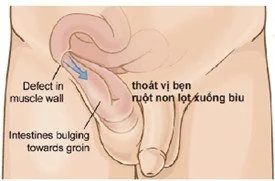
- Causes & Etiology:
- In neonates, an inguinal hernia can develop if the processus vaginalis fails to obliterate completely, resulting in a congenital weakness in the inguinal wall. Clinical literature indicates that this condition affects approximately 2–3% of male infants, whereas the incidence in female infants remains below 1%.
- In older adults, direct inguinal hernias are more prevalent, primarily arising from the natural, age-related weakening and degeneration of the abdominal muscles and fascia.
- In addition, several risk factors increase the likelihood of inguinal hernia, such as genetics, male sex, chronic cough or constipation, smoking, pregnancy, premature birth, or groin trauma.
- Clinical Symptoms and Diagnosis
- Patients may experience signs such as a unilateral or bilateral bulge in the groin area that increases in size during coughing, straining, playing sports, or engaging in heavy labor, and typically disappears when lying down. Along with this, patients may feel a heavy or full sensation in the groin, sharp pain, or scrotal swelling in men.
- However, some of these symptoms can closely resemble conditions of the genital system, such as testicular torsion, hydrocele, etc. Therefore, patients should visit the hospital for thorough clinical evaluation, accurate diagnosis, and definitive treatment of their condition.
- To diagnose an inguinal hernia, the initial method employed is a clinical examination conducted while the patient is standing; the physician will instruct the patient to cough or strain. At this moment, a bulge in the groin may become visible, and the physician uses digital palpation maneuvers to confirm and identify the hernia.
- In cases where the clinical findings remain inconclusive, the physician may prescribe supplementary diagnostic imaging such as pelvic ultrasound, CT, or MRI. During these procedures, the patient may be instructed to strain to make the herniation more clearly visible.
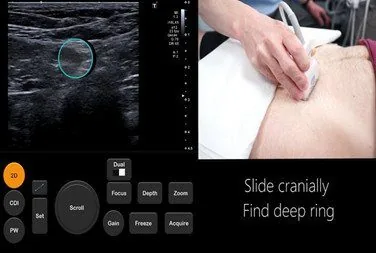
- Potential Complications of Inguinal Hernia
The presentation and severity of complications vary depending on individual clinical circumstances.
In mild cases, an inguinal hernia may produce persistent discomfort or a dull ache during coughing, straining, prolonged standing, or physical exertion. This can undermine psychological well-being, impede daily activities, and diminish quality of life, frequently leading patients to restrict physical exercise and consequently compromising their overall health.
If left unaddressed over time, the herniated viscera can repeatedly pass through the abdominal defect and form dense adhesions with adjacent tissues, preventing spontaneous reduction back into the peritoneal cavity. This condition, termed an incarcerated hernia, carries a heightened risk of irreversible tissue compromise.
Some patients may experience a 'strangulated' hernia complication, in which the herniated organ is severely constricted at the orifice, completely cutting off blood circulation...
Proactively protect your health with our experienced specialist doctors and advanced medical equipment.
📞 BOOK AN APPOINTMENT NOW: (+84) 28 2200 8686 – (+84) 901 295 399
⏰ Monday – Saturday: Morning 7:30 AM – 12:00 PM, Afternoon 1:30 PM – 5:00 PM | 24/7 Emergency: ((+84) 937 389 539)
💳 Full nationwide health insurance coverage & Direct billing for private insurance accepted