
Auricular Chondritis:
Essential Things to Know

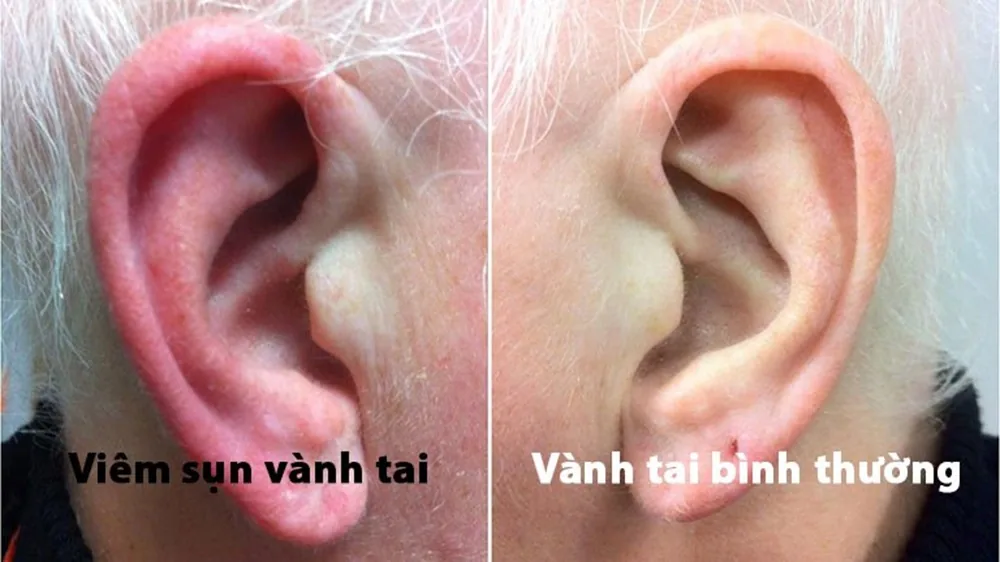
Auricular chondritis is an infection of the cartilage and perichondrium of the external ear, causing discomfort and pain for patients. This is a common condition presenting with symptoms such as swelling, warmth, redness, and pain in the auricle. If left untreated, auricular chondritis can lead to numerous complications affecting the patient's aesthetics and health.

-
Classification and staging
Auricular perichondritis can be classified by stage and severity of infection. The main stages include:
-
Initial stage: The auricle is swollen and painful without exudation. Standard treatment typically involves a combination of antibiotics, anti-inflammatory drugs, and analgesics.
-
Subsequent stage of the disease: The auricle begins to develop exudate. At this stage, the physician may perform aspiration, apply compression bandaging, and administer antibiotics.
-
Severe stage: Exudative fluid collections in the auricle develop secondary infections into abscesses, with severe auricular chondritis and necrosis. In such cases, the physician will incise the abscesses, thoroughly drain the purulent pockets, curette all inflamed cartilage tissue, and administer concomitant antibiotic therapy.
Additionally, auricular chondritis is classified according to the anatomical site and severity of inflammation, manifesting as either acute or chronic forms. The acute phase typically presents abruptly with erythema, edema, localized heat, and pain in the auricle. Conversely, the chronic phase may be asymptomatic regarding pain but presents with manifestations such as cartilage induration and thickening.
-
Acute inflammation usually lasts for a few weeks and can be controlled with appropriate treatment.
-
Chronic inflammation lasts for months or years, and can be more difficult to resolve.
-
Causes and symptoms of auricular perichondritis
The most common cause of auricular perichondritis is ear piercing with unsterilized equipment, or it may develop secondary to inappropriate management of other conditions such as acute otitis externa, auricular cellulitis, or infection P.aerunosa and S.aureus bacteria.
Symptoms include pain, swelling, redness, and warmth in the auricle area. The condition can spread to the entire auricle.In severe cases, deformity or partial loss of the auricular cartilage may occur.
-
Treatment protocol, complications of the disease
The treatment protocol for auricular chondritis typically involves the use of antibiotics to control infection, anti-inflammatory medications to alleviate pain and swelling, and in select cases, surgical intervention may be indicated to excise the damaged cartilage. Complications of the condition may include auricular deformity, abscess formation, or even the dissemination of infection to adjacent anatomical regions.
Complications of auricular perichondritis can occur if not promptly treated, including permanent auricular cartilage damage, widespread infection, and irreversible ear deformity.
-
Preventive measures
To prevent auricular perichondritis, several measures can be applied, such as:
-
Avoid ear trauma
-
Maintain proper ear hygiene and limit wearing ear jewelry if there is a history of infection.
-
Routine otologic assessments and prompt medical evaluation upon noticing any atypical symptoms are essential to prevent the progression of this condition to advanced stages.
Early detection and proper treatment are crucial to prevent serious complications of auricular perichondritis. If you experience any abnormal symptoms, visit a specialist for appropriate consultation and treatment.
Proactively protect your health with our experienced specialist doctors and advanced medical equipment.
📞 BOOK AN APPOINTMENT NOW: (+84) 28 2200 8686 – (+84) 901 295 399
⏰ Monday – Saturday: Morning 7:30 AM – 12:00 PM, Afternoon 1:30 PM – 5:00 PM | 24/7 Emergency: ((+84) 937 389 539)
💳 Full nationwide health insurance coverage & Direct billing for private insurance accepted